Waste for Life: Alleviating Poverty with Waste
Turning trash into resources and helping to alleviate poverty at the same time is an audacious goal, but an organization called Waste for Life has taken it on. The group has been working in Lesotho, South Africa, and Argentina to transform discarded materials, chiefly non-recycled plastic waste, into both domestic products and building materials.

Waste for Life is a network of scientists, architects, engineers, designers, and cooperatives working together to develop poverty-reducing solutions, using their scientific knowledge and simple technologies to add value to waste by turning them into resources. The organization’s goals are to “reduce the damaging environmental impact of non-recycled plastic waste products and to promote self-sufficiency and economic security for at-risk populations who depend upon waste to survive”.
Waste for Life began in 2006, when two engineers from Queens University in Canada journeyed to Lesotho, South Africa, to research the viability of a waste-reduction program could also help to reduce poverty in that country. Lesotho has a huge percentage of its population that exists on less than $1.25 per day, and has extremely high rates of HIV/AIDS. Argentina, with 30% of the population below poverty level and annual inflation rates of up to 30%, became another target for the organization in 2007, as the number of ‘cartoneros‘ (those who sort through waste to sell to recyclers) was growing at a rapid rate due to the country’s economic collapse in 2002.

“We, ourselves, are not interested in profit, but are keen to disseminate a technology that upgrades waste plastic bags and natural fibers into composite materials for use in domestic products and building materials.”
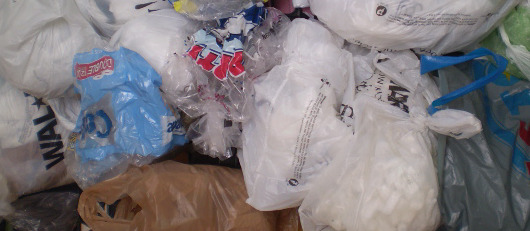
Waste for Life aims to create “locally based affordable technologies to make building materials and domestic products from waste fiber and plastic composites.” One of the most innovative processes developed by Waste for Life is that of using a ‘hot press‘ to turn plastic bags collected by the cartoneros into useful (and affordable) products, such as building materials and household goods (such as waterproof rain boots). The goal is to be able to teach the people collecting the raw materials how to create these products as a way to boost their income (currently only about 15 pesos per day).
 Composite building material produced from waste paper and plastic is another of the organization’s ideas, and the group is currently working in Lesotho to develop ceiling tiles made from agave fibers and plastic and paper waste.

Get the Green Living Ideas book in softcover or PDF for as low as $2.99!


About the Author

Derek Markham lives in southwestern New Mexico and digs bicycles, simple living, organic gardening, sustainable lifestyle design, slacklining, bouldering, and permaculture. He loves good food, with fresh roasted chiles at the top of his list of favorites. Catch up with Derek on Twitter, RebelMouse, Google+, or at his natural parenting site, Natural Papa!
Related Posts

3 Categories of Stuff You Don’t Even Want (Let Alone Need) in Your Zero Waste Lifestyle →

How Long Does it Take a Golf Ball to Decompose? →
What is Waste? →


